We made a short musical about the four most dangerous letters in software. Here’s why, and how to get your own LGTM stamp.
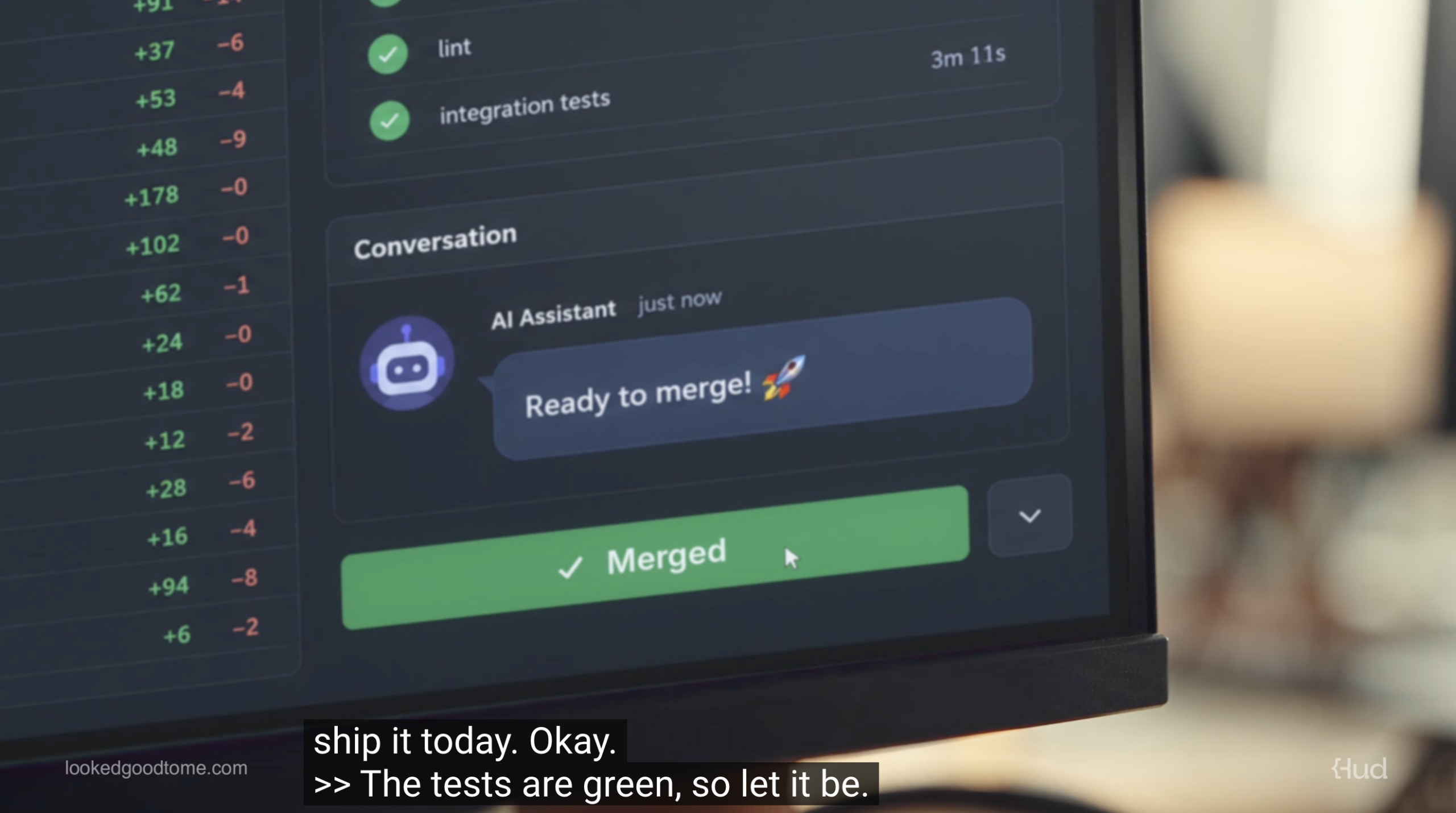
A coding agent gets a ticket: refactor the payment service, make it production ready. A few minutes later it reports back. Done. 10,000 lines across 128 files. Ready for review.
That’s the opening shot of LGTM, a short musical film we’re releasing today. What happens next, every engineer already knows. Nobody reads 10,000 lines. The diff looks clean, the tests pass, the checks are green, and someone types four letters.
LGTM used to mean “I read this, and it’s right.” Now it often means “I read what I could.” The film is about that gap, and so is Hud.
Watch the film
One developer, one approval, and about 3,000 years of people saying yes to things they didn’t look inside. He turns up at the gates of Troy, on a building site in Pisa, at the wheel of the Titanic, and writing a program patch that affects airports in a really bad way. Every time, it looked good to him.
Why we made a musical about code review
Agents write a change in minutes, but they don’t know how your system behaves in reality. So every PR now forces a choice between two bad options:
- Slow down. Review every PR properly. AI-generated PRs already wait 4.6x longer before anyone picks them up for review, according to LinearB’s 2026 benchmarks of 8.1 million PRs.
- Ship blind. Approve what you don’t fully understand. In New Relic’s 2026 State of AI Coding report, 82% of tech leaders had at least one production failure tied to AI-generated code in the previous six months.
Most teams take option 2 more often than they’d admit. That isn’t carelessness. Code review was never built to answer the questions that decide whether a change breaks production: who calls this function, how often, and what happens under load. None of that is in the diff.
We could have written another whitepaper about it. Instead we wrote a song, because every engineer already gets the LGTM joke, and the best jokes are the ones that are a little too true.
A short history of LGTM
The film’s point is that LGTM isn’t new. Only the volume is.
- Troy, around 1200 BC. A guard at the gate looks at a very large wooden horse. It looked good to him.
- Pisa, 1178. A builder looks up at a tower that has just started to lean. It looked good to him.
- The North Atlantic, 1912. A captain sees something white out the window. It looked good to him.
- An airport, July 2024. A security update passes validation and ships everywhere at once. About 8.5 million Windows machines crash, thousands of flights are grounded, and every screen in the terminal reads ERROR. It looked good to him.

Troy, Pisa, the Titanic and LGTM Air. Stills from the film.
Same face, same four letters, every time. By the last scene they’re all crowded around one desk, staring at the same PR.
And if July 2024 feels like a long time ago, last week’s global email outage started with a network change. It probably looked good too.
The third option: put production in the review
Hud removes the trade-off by bringing live production data into the review. Hud is a runtime code sensor: it runs with your app and learns how every function behaves in production. Then it brings that context to the PR, to the rollout, and to your AI coding tools.
Low-risk changes ship right away. Everything else gets a closer review, with production evidence attached. And every change is watched until it’s fully stable in production.
That moves three numbers engineering leaders already track:
- Time to merge. Hud customers see 20 to 30% of PRs marked safe to merge, so they skip the review queue.
- Change failure rate. monday.com caught a regression 14 minutes into a rollout, scoped to the function.
- Recovery time. Riverside reverted a flawed deploy in about 8 minutes, and Hud customers get to root cause in about 2 minutes.
So LGTM means something again.
See it for yourself: lookedgoodtome.com
Alongside the film, we’re launching lookedgoodtome.com. It makes the same argument one scene at a time, and lets you play reviewer.
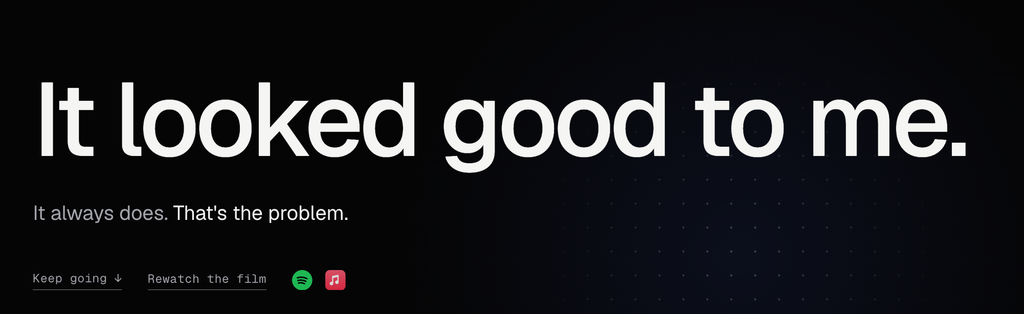
You reviewed everything you could see. The diff reads clean, the tests pass, the checks are green. But production wasn’t in the review: who calls the code, how often, and what happens under load. Each scene is a small pixel-art game: move over it to look inside, or do what we all do and click LGTM.
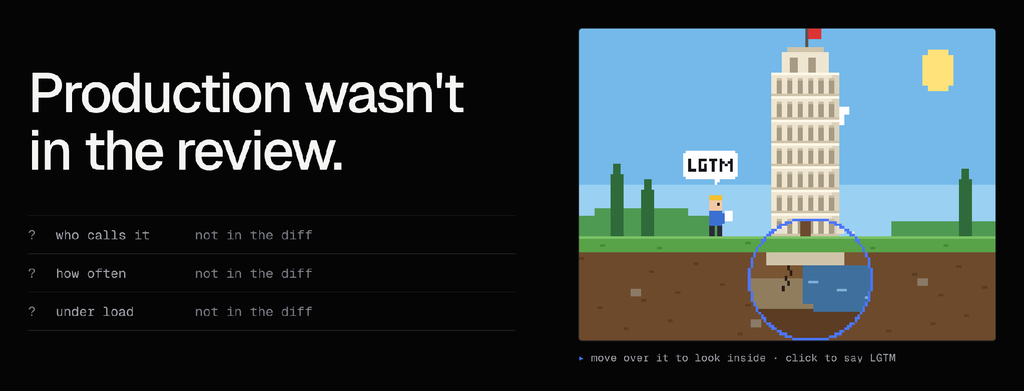
Move over the tower to see what the review missed.
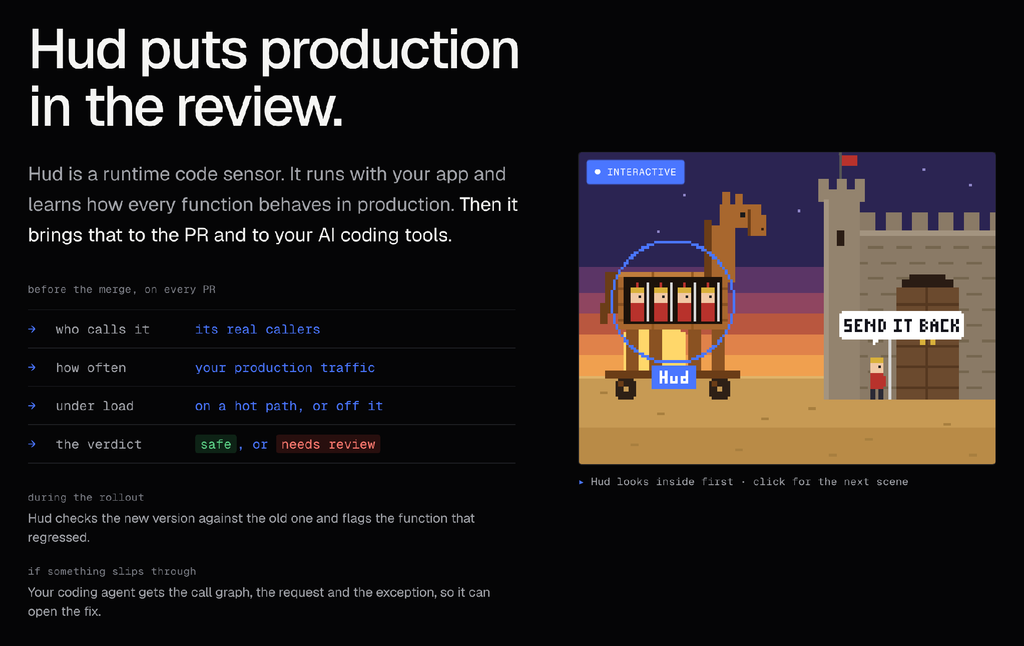
The last scene goes back to Troy. This time Hud looks inside the horse first, and the guard sends it back.
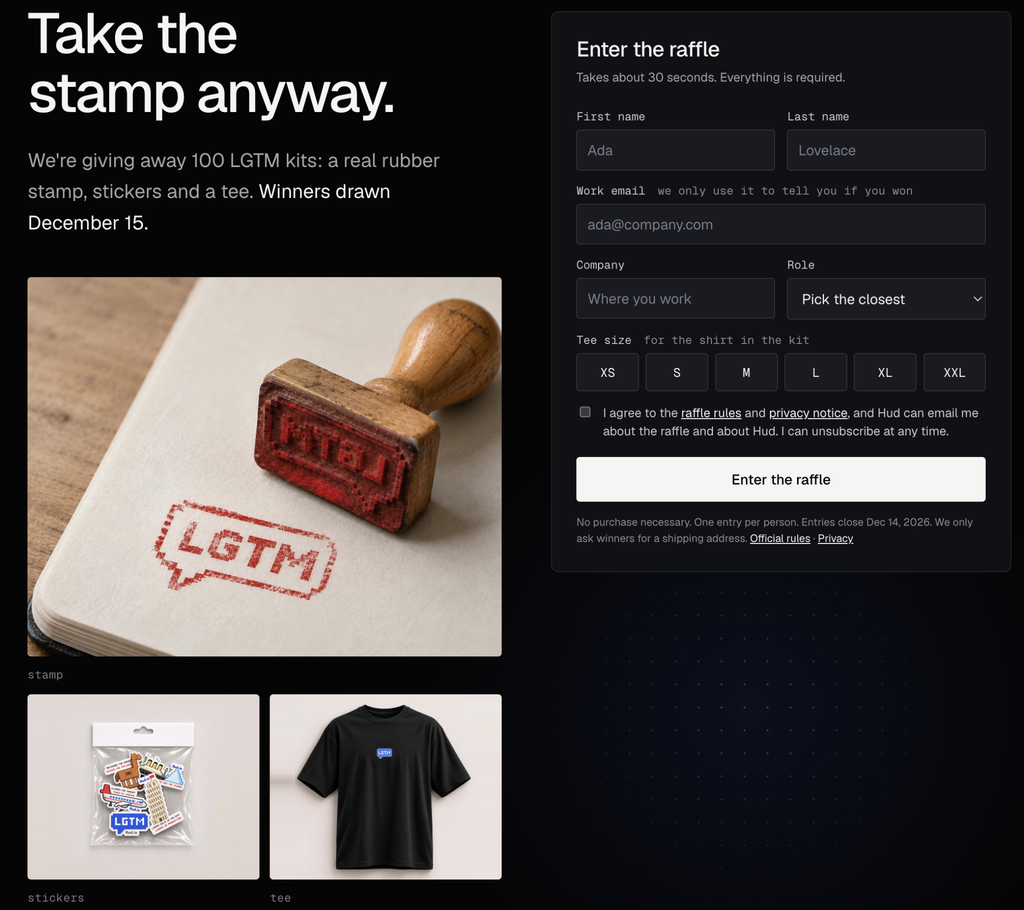
Take the stamp anyway
You’ll still say LGTM. With production in the review, it’ll just be true. So we made a real stamp for it.
We’re giving away 100 LGTM kits. Each has a real LGTM rubber stamp, a set of stickers and a tee. To enter, fill in the form at lookedgoodtome.com; it takes about 30 seconds.
- Entries close: December 14, 2026
- Winners drawn: December 15, 2026
If you win, we’ll email you for a shipping address. No purchase necessary, and one entry per person. The official rules have the details.
Watch the film, look inside, and enter the raffle. Next time a PR looks good to you, make sure production agrees.
About authors